26.10.2026 AI Governance in Practice, Part 1: Giving AI Access to Data, Without Giving It Access to Everything
This is a new series, following my earlier posts on building software at Fatman Oy with AI agents. That series was about how we build. This one is about how we keep it under control.
Most AI data problems won’t come from an attack. They’ll come from an agent that was allowed to see too much.
So the useful question isn’t “which tool should we use?” It’s “what is this allowed to touch, and what happens if it’s wrong?”
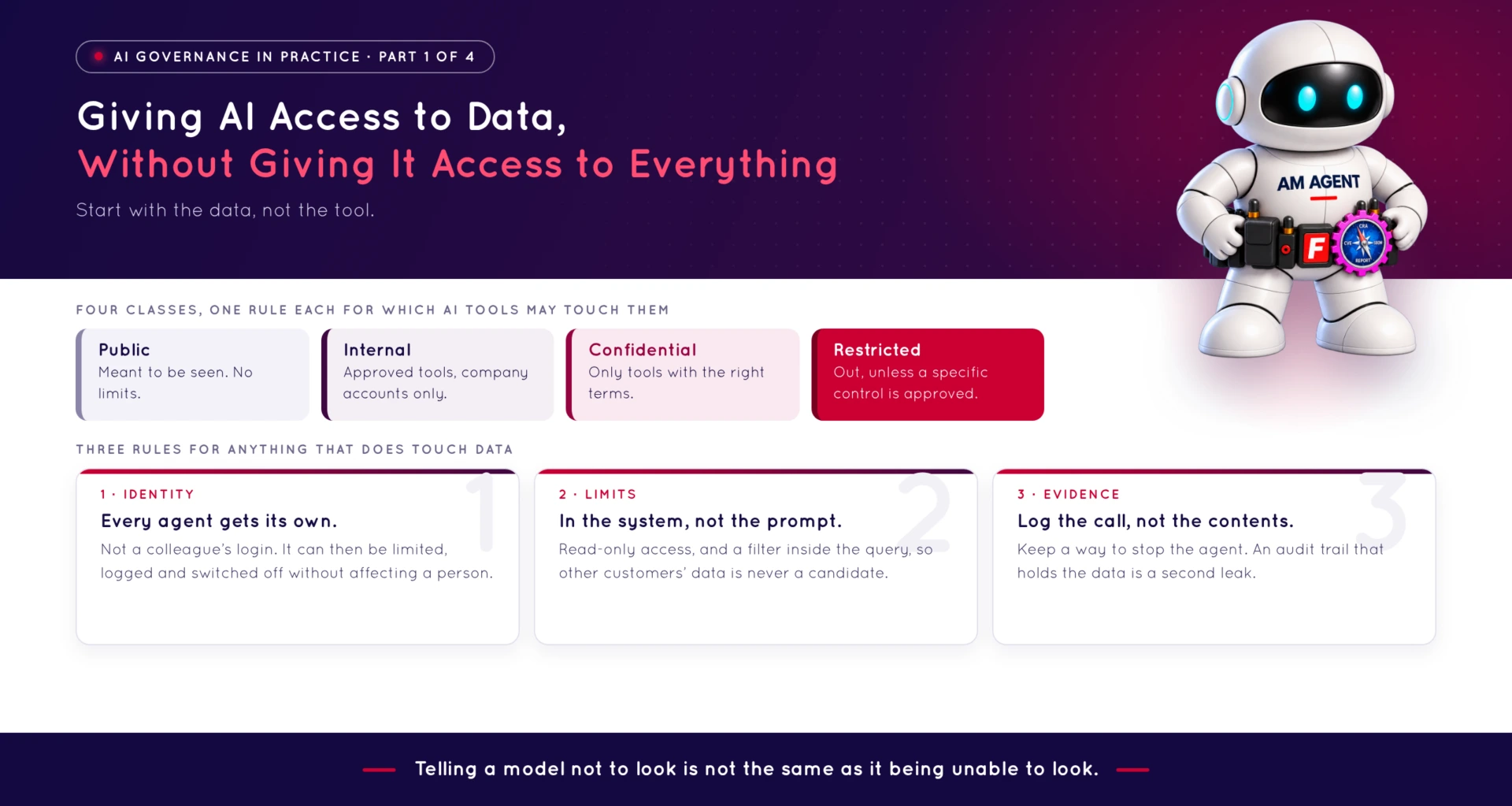
Start with the data, not the tool. Four classes: public, internal, confidential, restricted. Each class has a rule for which AI tools may handle it. Restricted data, like credentials, stays out of AI tools unless a specific control is approved.
Then three rules for anything that does touch data.
Every agent gets its own identity. Not a colleague’s login, not a shared account. Then it can be limited, logged and switched off without affecting a person.
Limit access in the system, not in the instructions. Telling a model not to look is not the same as it being unable to look. In a retrieval assistant I built for field technicians, the customer filter sits inside the search query itself, so another customer’s documents are never candidates. The finance agent, now in pilot with some of our customers, is read-only, through a key that reaches one customer’s data.
Log every call, without storing what was in it, and keep a way to stop it. An audit trail that holds the data itself is a second leak.
One more check before any of this: what does the vendor do with prompts? “Not used for training” and “not kept” are different promises. Read the agreement, not the web page.
It all looks fairly dull. It’s mostly access control, done carefully. That’s the point.
What I haven’t built is write access. That is still a design: a person approves, and a separate service acts.
What data would you refuse to let an AI near?
Next in this series: who owns an AI agent. An identity, an owner, and what happens when it’s retired.